
SEO vs GEO: How Search Is Changing for Local Businesses
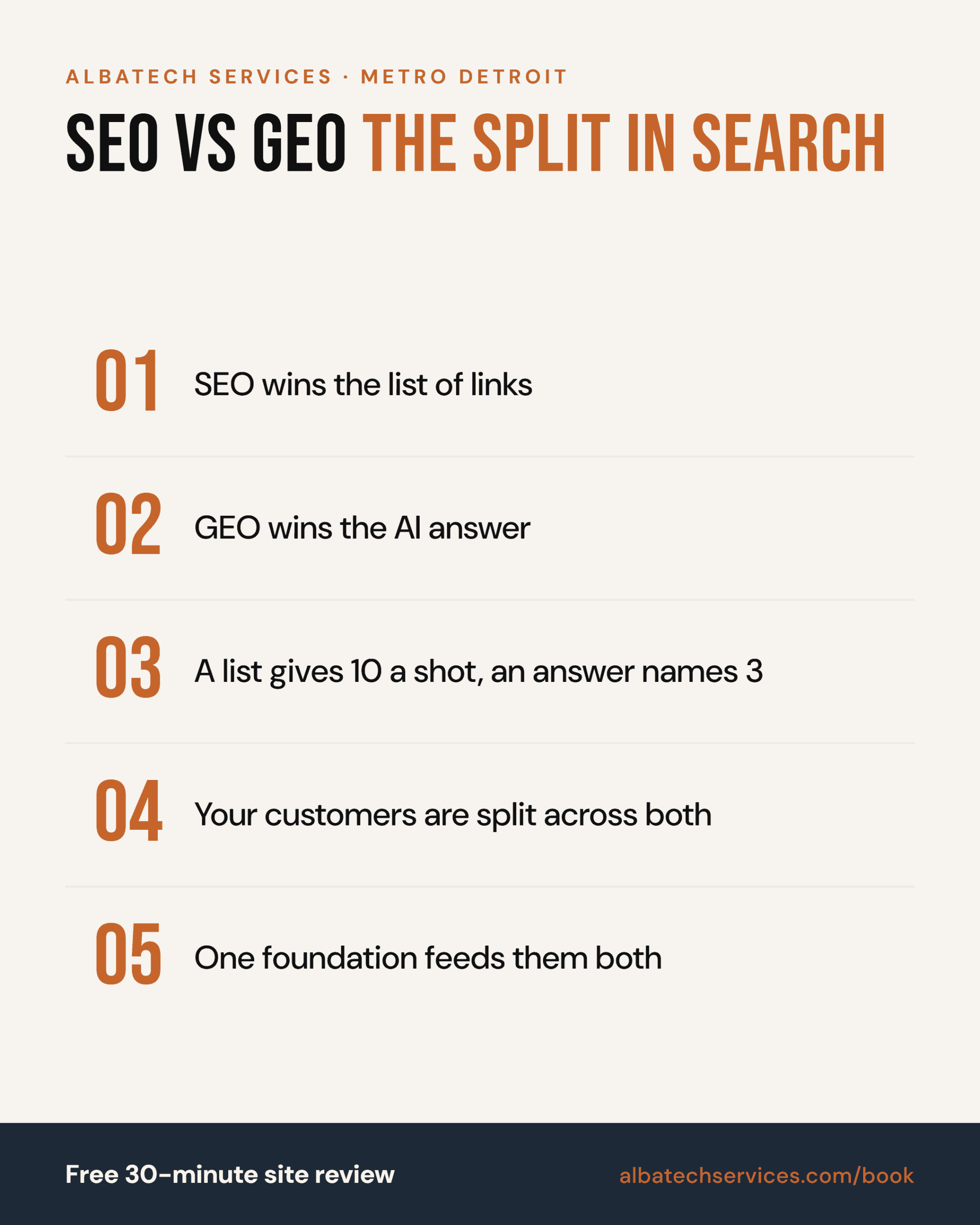
Search is splitting in two. For twenty years, you searched, Google gave you a list of links, and you clicked one. Now you can ask an AI a question and get a straight answer with a couple of names in it, no clicking required. Both are happening at once, and a Metro Detroit business now has to show up in both. Here’s the difference between SEO and GEO, and why you can’t just pick one.
SEO: winning the list of links
SEO, search engine optimization, is the old game and it’s not going anywhere. It’s about ranking in Google’s results, landing in the Map Pack, getting the click. A huge share of your customers still search the normal way, see a list, and choose. That behavior is decades deep and it isn’t vanishing this year. SEO is still the bigger, more reliable channel today.
GEO: winning the answer
GEO, generative engine optimization, is the new game. It’s about getting named when someone asks ChatGPT, Google’s AI, or another assistant for a recommendation instead of a list. There’s no page of links to scan, just an answer with two or three businesses in it. Getting into that short answer is a different, smaller door, and it’s opening fast. (Plain-English version: what GEO actually is.)
The real difference: a list vs a shortlist
Here’s the shift that matters. A list of ten links gives ten businesses a shot; the customer does the sorting. An AI answer names two or three and does the sorting for the customer. That’s a much smaller opening, and it changes the stakes. In the old world, page one was survival. In the new one, being one of three names an AI trusts is survival. Miss the shortlist and you’re not on page two, you’re just not mentioned.
Why you need both, not one
It’s tempting to ask which one to bet on. Wrong question. Your customers are split across both behaviors right now, plenty still Google, a growing share ask AI, and lots of people do both for the same decision. Bet only on SEO and you slowly go invisible to the AI users. Chase only GEO and you abandon the majority still searching the normal way today. You cover both or you leave customers on the table.
The good news: one foundation feeds both
Here’s what makes this manageable instead of overwhelming. SEO and GEO run on mostly the same fuel. A fast, clear website that plainly says what you do and where. Consistent information across the web. A steady stream of reviews. Honest content answering real questions. Do that well and Google ranks you and the AI names you, because you’ve given both the same clear, trustworthy signals. You’re not building two marketing programs, you’re building one solid foundation that two different machines can both read. (See why the foundation comes first.)
What I’d actually do
Keep doing SEO, because it’s where most of the searches still are. Add the handful of GEO steps that are genuinely new and easy while your competitors ignore them. Don’t torch your budget chasing the shiny new thing, and don’t pretend the shift isn’t happening either. Foundation first, aimed at both readers.
A way to measure both without a fancy tool
For the SEO side, open Google Search Console and look at clicks and impressions for your service and city pages. For the GEO side, ask an AI assistant the questions your customers ask and keep a short log: the date, the question, who got named. Do it monthly. After three months you’ll see whether you’re showing up more or less, and you’ll know which pages and profiles are doing the work.
What it looks like in Detroit and Birmingham
In Detroit, a business stuck on page two usually has an unfinished profile and one page trying to cover the whole metro. The same gaps make an AI skip you, because there’s no clear sentence to repeat. See Detroit SEO. In Birmingham, being found is half the job and being picked is the other half, and I break that down on Birmingham SEO. Whichever city you’re in, write down your first measurement this week, because a baseline is the only way to see progress later.
Want to see where you stand in both?
I’ll check your Google rankings and ask the AI assistants the questions your customers ask, live, and show you where you show up and where you don’t. No pitch deck, no closer, just 30 minutes and a straight answer.
Book a free 30-minute strategy call.
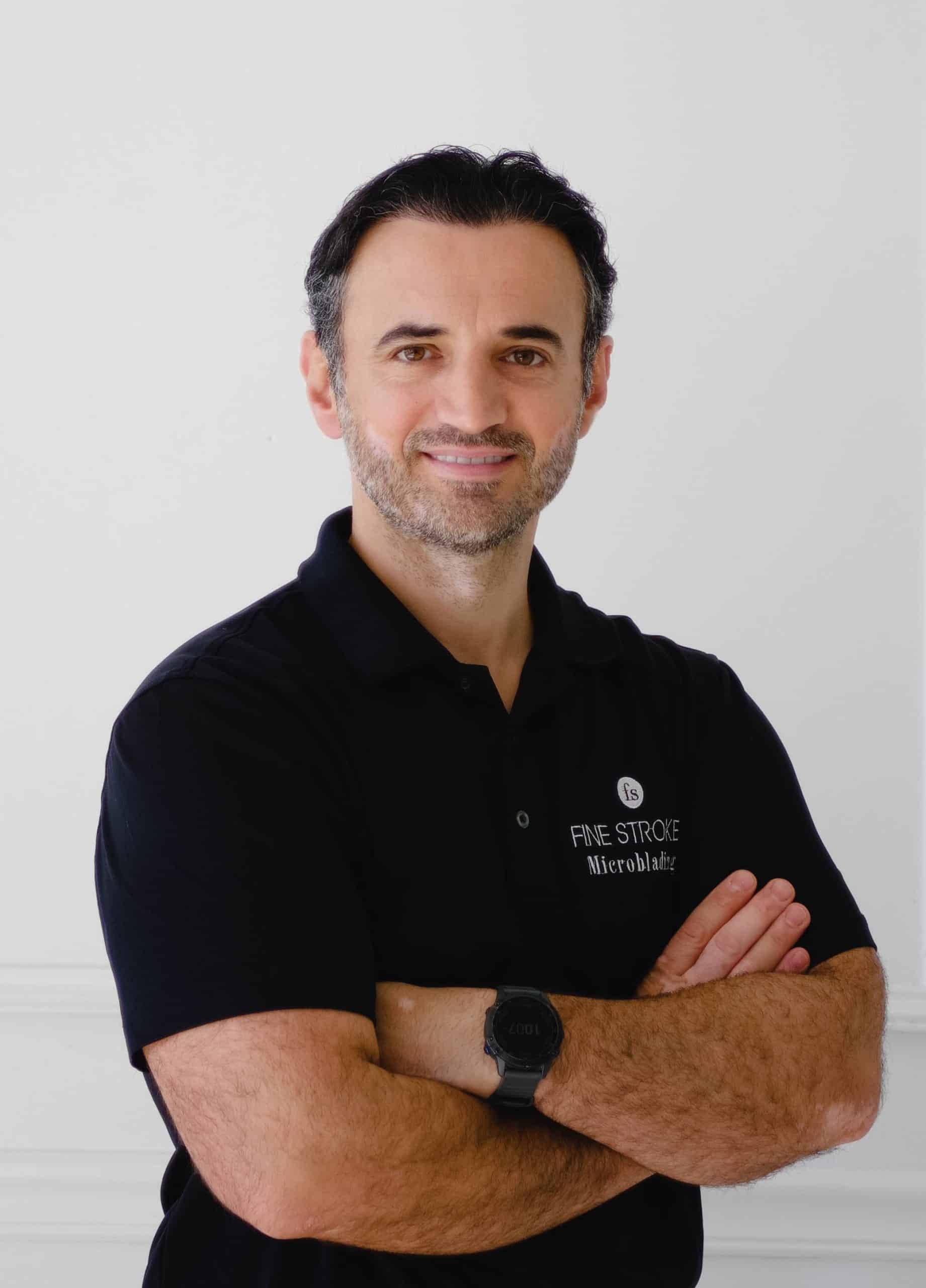
I run AlbaTech as a one-person shop in Metro Detroit. Since 2016 I’ve built and fixed the marketing foundations for around 30 local businesses, and I’m the person owners call after they’ve been burned by an agency that couldn’t say what changed. Work with me and you work with me. No closers, no handoffs.